 Habitveen
Cash had one hidden feature: it hurt a little to hand over. You saw the note leave your wallet, and the thinner wallet kept the score. UPI removed the friction — and with it, the memory. A scan, a beep, and the money is gone without ever feeling spent.
Why digital spends don’t register
Psychologists call it the pain of paying — and one-tap payments are engineered to remove it. No note leaves your hand, no balance stares back at you. Each payment is designed to be forgettable, and it works: by evening, most people can’t list even half of the day’s small scans.
₹100 a day is ₹36,000 a year
The trap isn’t the big spends — you remember those. It’s the chai, the auto, the quick snack, the “it’s just ₹40” moments, several times a day. A modest ₹100 of invisible daily spending is ₹3,000 a month — often the entire gap between “I should be saving more” and actually saving it.
The fix: log at the moment you pay
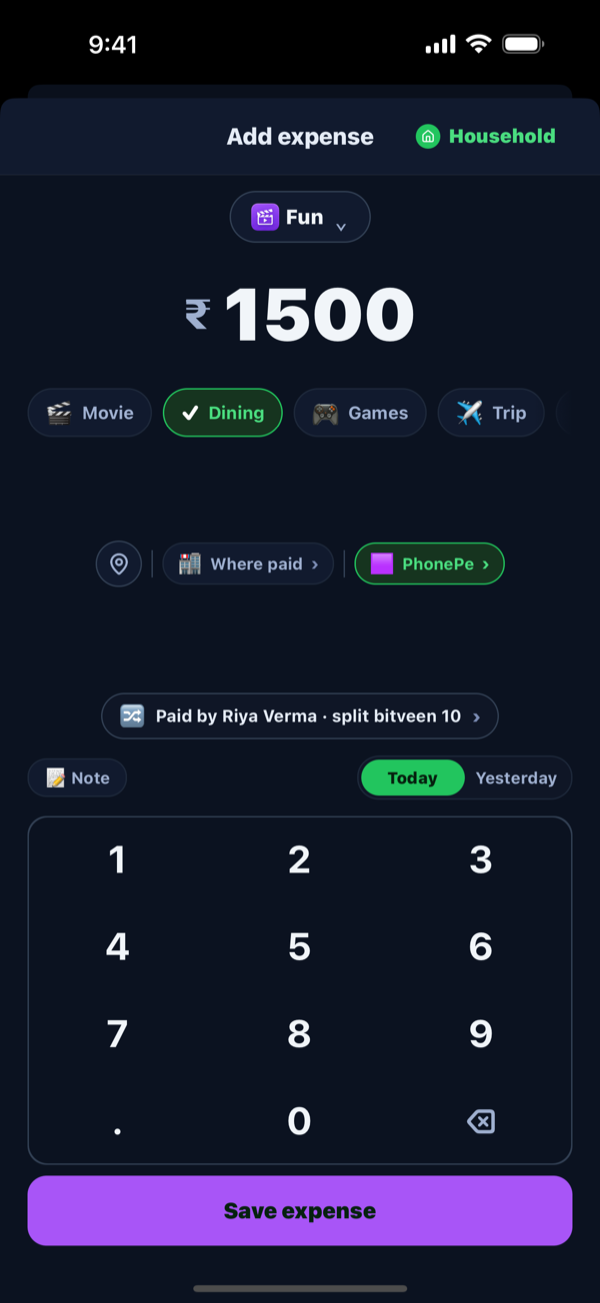
You don’t need to spend less by willpower. You need each payment to register again — and a 2-second log does exactly that. Right after the UPI beep, type it into Habitveen in plain words: “chai 20”, “auto 60” — or tap a category icon from Home. The log itself becomes the new pain of paying: gentle, but enough to keep the score.
Then look once a week
With the small spends captured, your Insights finally tell the truth: the trend, the top categories, the days you leak the most. Most people who start logging their UPI payments are genuinely surprised by one specific category within the first two weeks — and that surprise, not a budget, is what changes the behaviour.