 Habitveen
Overspending is rarely a willpower problem. It’s a visibility problem — money leaves in small, forgettable amounts you never add up. You don’t need a strict budget to fix it. You need five small habits.

1. Log every expense the moment it happens
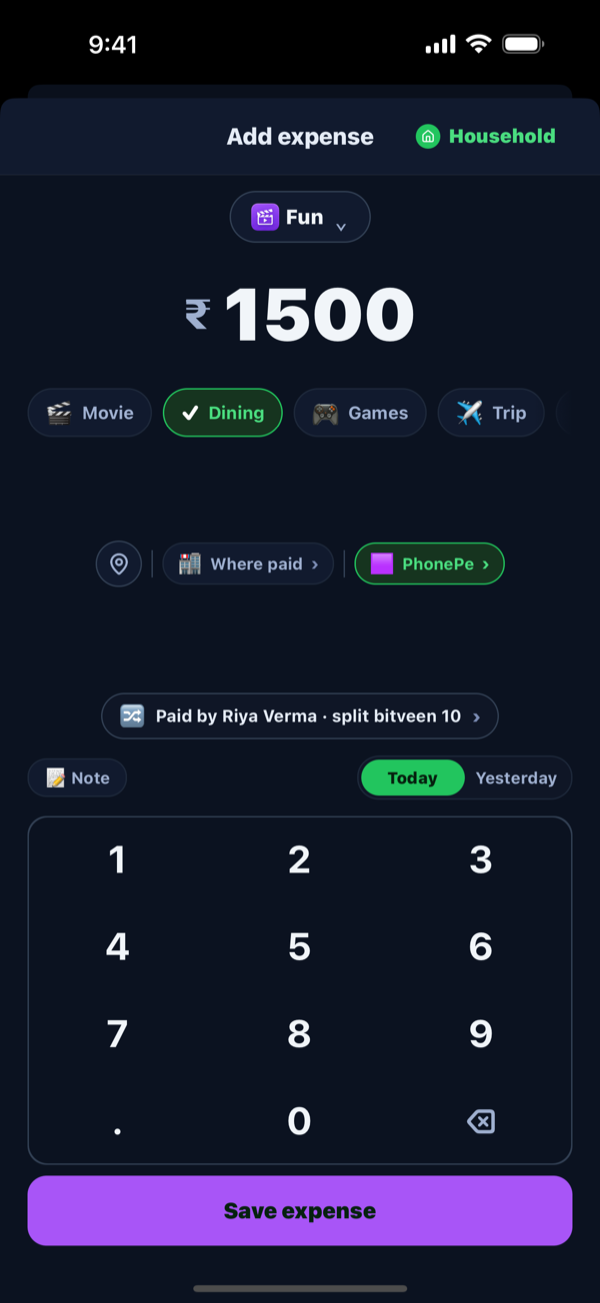
The single highest-impact habit. If you wait until evening, you’ll forget half of them — and the small cash ones are exactly the leaks. The trick is to make logging so fast it isn’t a decision: in Habitveen you can type “chai 20” in plain words, or tap a category icon from Home. Two seconds, done.
2. Review last week, once a week
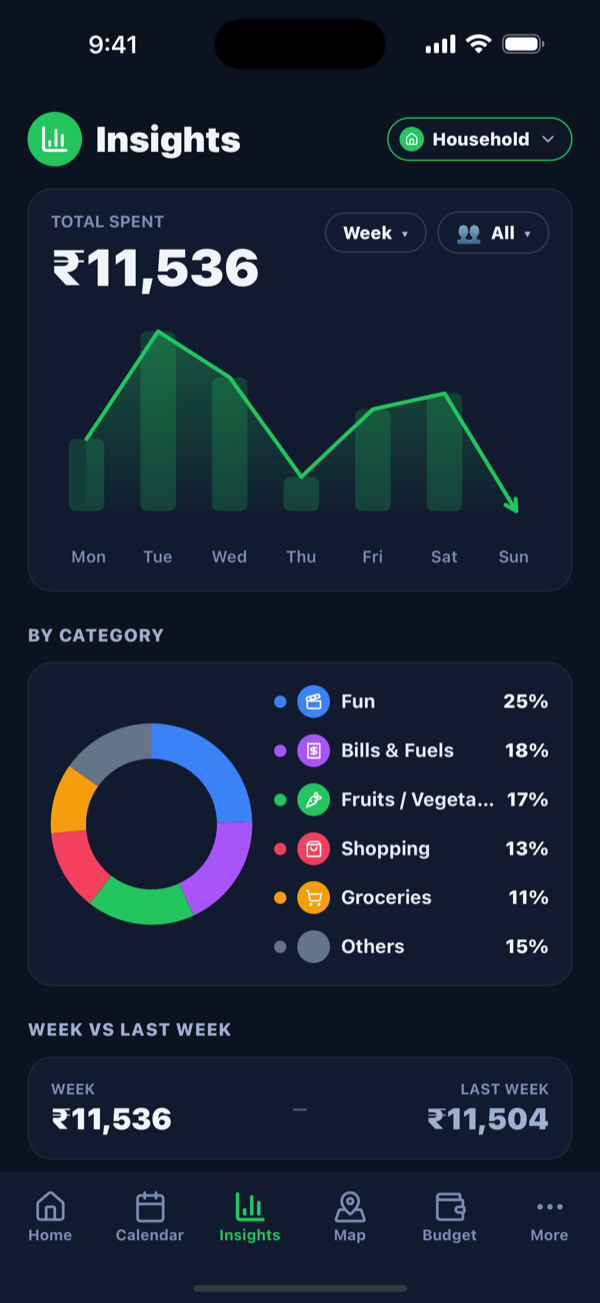
Five quiet minutes on a Sunday beats an anxious month-end reckoning. Open your Insights, look at the week’s total and your top categories, and just notice. No judgement, no spreadsheet — awareness alone shifts behaviour more than any rule you set for yourself.
3. Name your top “leak” category
Almost everyone has one runaway bucket — food delivery, subscriptions, impulse shopping. You don’t have to cut it to zero. Just pick the one category that’s biggest and set yourself a soft ceiling for it. Fixing one leak beats vaguely trying to spend less on everything.
4. Add a 24-hour rule for wants
For anything that isn’t a need, wait a day before buying. Log it as a note or a reminder to yourself. Most impulse urges fade overnight — and the ones that don’t are the purchases you’ll actually be glad you made.
5. Make it a shared habit
Money habits stick better when they’re not solo. If you share expenses with a partner or family, track them together in a shared Space so everyone sees the same picture. A little visibility between people removes the guesswork — and the friction — from spending decisions.