 Habitveen
Most budgets die within two weeks, and it’s rarely a discipline problem. It’s a design problem: fifteen categories, precise limits for each, daily tracking against all of them. That’s a part-time job, not a habit. A budget you’ll actually keep has to be almost embarrassingly simple.

Start from last month’s reality, not a fantasy
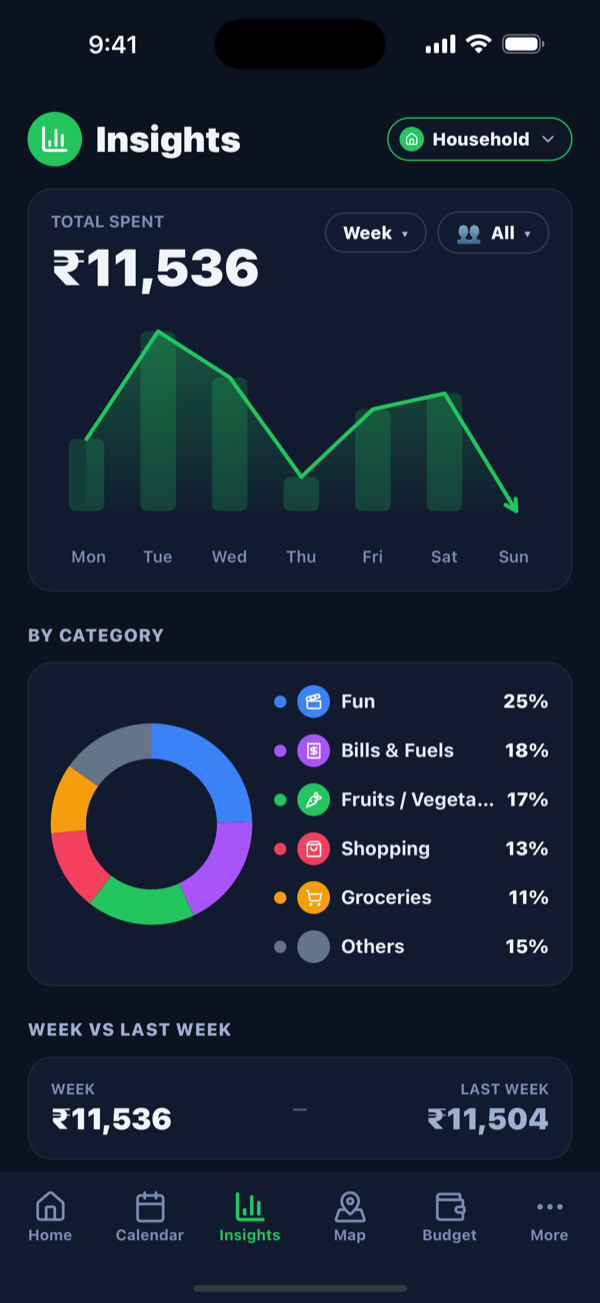
Don’t invent numbers you’d like to spend — look at what you did spend. Open your Insights for last month: the total, and the category breakdown. That’s your baseline. A budget built on reality needs only small corrections; a budget built on wishes collapses on the first grocery run.
Watch three numbers, not fifteen
Then set exactly three numbers for this month:
- A savings-first amount — moved out on salary day, before any spending happens;
- A ceiling for your one leak category — the single bucket that ran away last month (for most people it’s food delivery or shopping);
- A rough total for everything else — one number, not ten.
Everything else is just logging as usual. You’re not policing every category — you’re watching the two or three that actually decide your month.
Check twice a month, not every day
Daily budget-checking burns people out. Look twice: mid-month (are the three numbers on track? adjust the second half) and month-end (five minutes in Insights — did the leak category behave? did the savings survive?). That rhythm is sustainable for years, not weeks.
Let reminders carry the fixed stuff
EMIs, rent, insurance premiums, the RD — fixed payments don’t need budgeting, they need not being forgotten. Set each one up as a reminder in Habitveen once; it nudges you before the date and logs itself in the right category with one tap. Your attention stays on the spending you can actually influence.
Budgeting as a household? Share the picture
A budget one family member keeps secretly never holds. Put shared expenses in a shared Space so the grocery number is everyone’s number — the three-figure budget works much better when the people spending against it can all see it.