 Habitveen
Here’s an honest admission from an expense-tracker team: the app doesn’t change your spending. What changes it is a streak — logging every single day until awareness becomes automatic. The app’s job is just to make that streak cheap enough to keep.

Why 30 days, specifically
One month is the smallest window that contains your whole financial life: a salary day, the bill-and-EMI cluster, at least one weekend blowout, the quiet mid-month stretch. Log through all of it once and you’ve seen your complete pattern — not a guess about it. Shorter experiments miss the shape of the month; that’s why they don’t stick.
Make each log a 2-second event
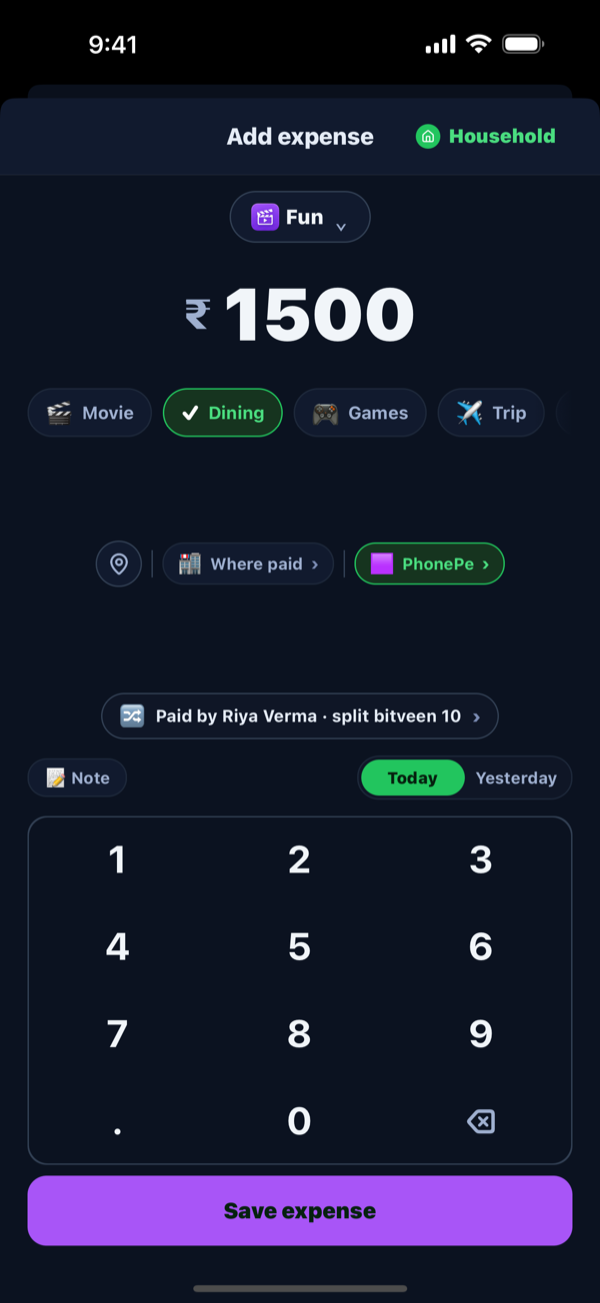
Streaks die when the daily action is heavy. So keep it feather-light: log at the moment you pay, in plain words — “chai 20”, “auto 60” — or one tap on a category icon from Home. If a day’s entry takes more than a few seconds, you’re doing more than the habit needs.
Let the flame keep the score
Habitveen shows your streak — how many days in a row you’ve logged — with each day’s total right next to it. It sounds like a gimmick until you have a 12-day flame you don’t want to break; that tiny reluctance is exactly the mechanism that carries you through the days you’d otherwise skip. And if you do miss a day, nothing is ruined: the point was never the number, it’s the habit forming underneath it.
What changes after the month
Somewhere in weeks three and four, a quiet shift happens: you start noticing the spend before you make it, because you already know you’ll be logging it. That pre-payment pause — not any budget, not any rule — is what actually lowers spending. The streak was never about the data. It was about installing that pause.